
Freight Decarbonization 2026: The Year of the Electric Corridor
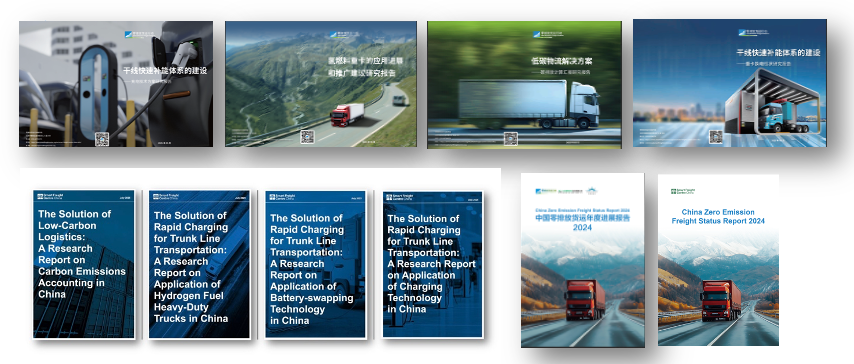
As we reflect on the global progress of electrification in 2025, the trajectory for 2026 is becoming clear. The market has moved beyond initial pilots, driven by three shaping trends: China's market dominance, rapid technological diversification, and the strategic shift toward a "corridor approach".
China: Crossing the Tipping Point
China: Crossing the Tipping Point
China leads the sector overwhelmingly, accounting for over 90% of global electric truck sales. The 2025 numbers indicate a market that has fundamentally shifted. The market registered 231,100 new energy heavy-duty trucks—a 182% year-over-year increase. By December 2025, electric trucks captured a 54% monthly market share, outselling diesel for the first time.
But the crucial signal to pay attention to is this: the annual average share for new energy heavy-duty vehicles hit 29% in 2025. According to social tipping point research by Damon Centola, this surpasses the 20–25% threshold required for new behaviors to become self-sustaining. While the total active fleet penetration remains below 5%, the trajectory of new purchase decisions suggests the transition is now inevitable, provided remaining blockers are removed.
Chinese Original Equipment Manufacturers (OEMs) are vertically integrated across the battery supply chain and are the world's largest producers of equipment critical to the renewable energy sector. This positions them to export not just electric trucks, but an integrated proposition: vehicles, batteries, and the clean energy infrastructure to power them. An aggressive venture into South and Southeast Asian markets—economies with high fossil fuel dependency and rapidly expanding renewable capacity—is already underway. Whether or not this export of technology materializes at scale, the lesson other countries should take from China is its full-stack approach: the integration of automotive, energy, and infrastructure policy into a single coherent strategy. This allows infrastructure, truck configuration, battery performance, and the various upfront, operational and energy costs to be minimized, making the transition to electric trucks a lot more natural.
Technology: Diversification and Infrastructure Wars
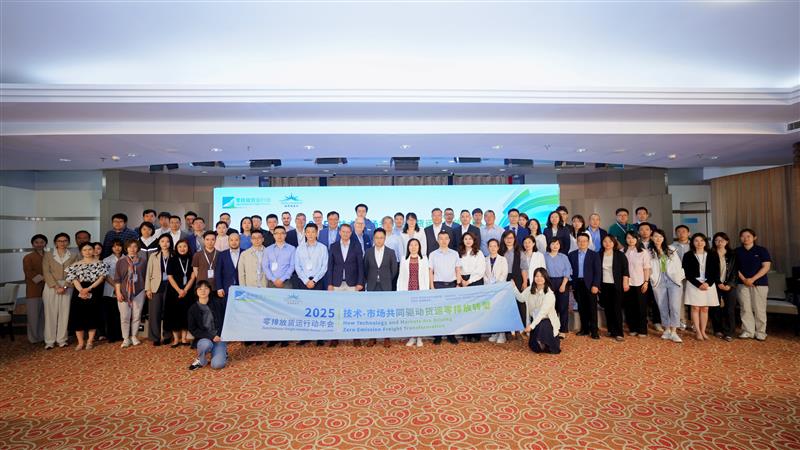
Chinese manufacturers have evolved beyond standard platforms to specialized applications, including refrigerated transport, heavy-duty mining, and industrial logistics. Battery capacity has expanded significantly—from a standard 282 kWh to 423 kWh, with premium models now exceeding 600 kWh to enable longer routes and heavier payloads. A promising innovation that could further accelerate the global transition is solid-state battery technology.
These batteries offer superior energy density—350-400 Wh/kg in current pilot production compared to 150-300 Wh/kg for conventional lithium-ion—enabling lighter vehicles with longer range. Solid-state batteries also promise faster charging, improved safety through non-flammable solid electrolytes, and significantly longer cycle life. Multiple manufacturers including Dongfeng, Geely, and Factorial are beginning pilot production in 2026, with mass production targeted for 2027-2030. While still early for heavy-duty applications, the technology represents a potential step-change in making electric trucks more competitive with diesel on payload capacity and operational flexibility.
Combined Charging System (CCS) remains the most common charging technology for electric trucks. However, the demands of long-haul operations—larger batteries, tighter turnaround times, and grid capacity constraints—keep the question of alternative charging technologies open. Three options are in active development, each at a different stage of maturity.
These batteries offer superior energy density—350-400 Wh/kg in current pilot production compared to 150-300 Wh/kg for conventional lithium-ion—enabling lighter vehicles with longer range. Solid-state batteries also promise faster charging, improved safety through non-flammable solid electrolytes, and significantly longer cycle life. Multiple manufacturers including Dongfeng, Geely, and Factorial are beginning pilot production in 2026, with mass production targeted for 2027-2030. While still early for heavy-duty applications, the technology represents a potential step-change in making electric trucks more competitive with diesel on payload capacity and operational flexibility.
Combined Charging System (CCS) remains the most common charging technology for electric trucks. However, the demands of long-haul operations—larger batteries, tighter turnaround times, and grid capacity constraints—keep the question of alternative charging technologies open. Three options are in active development, each at a different stage of maturity.
Megawatt Charging System (MCS) is the most likely challenger to standard plug-in charging, and is gaining traction globally. The SAE J3271 standard was published in March 2025, and the first public MCS session in Europe occurred in August 2025. MCS can deliver up to 1.5 MW, charging trucks from 20% to 80% in under 30 minutes. Major OEMs—Scania, MAN, Volvo, Daimler—have announced MCS-capable trucks for 2026. China is moving faster than most: 6-MW liquid-cooled supercharging stations are already operational along Yunnan province freight corridors, providing 200 km of range in 15 minutes.
According to China Society of Automotive Engineers, major manufacturers including Dongfeng, Beiben, XCMG, Foton, JAC, GAC Lingcheng, and Deepway are set to introduce over 50 to 100 vehicle models into the market over the next year. Technical barriers remain—liquid-cooled connectors, grid capacity at charging sites, and coordination between charging providers and fleet operators—but MCS is emerging as the standard for general long-haul logistics.
According to China Society of Automotive Engineers, major manufacturers including Dongfeng, Beiben, XCMG, Foton, JAC, GAC Lingcheng, and Deepway are set to introduce over 50 to 100 vehicle models into the market over the next year. Technical barriers remain—liquid-cooled connectors, grid capacity at charging sites, and coordination between charging providers and fleet operators—but MCS is emerging as the standard for general long-haul logistics.
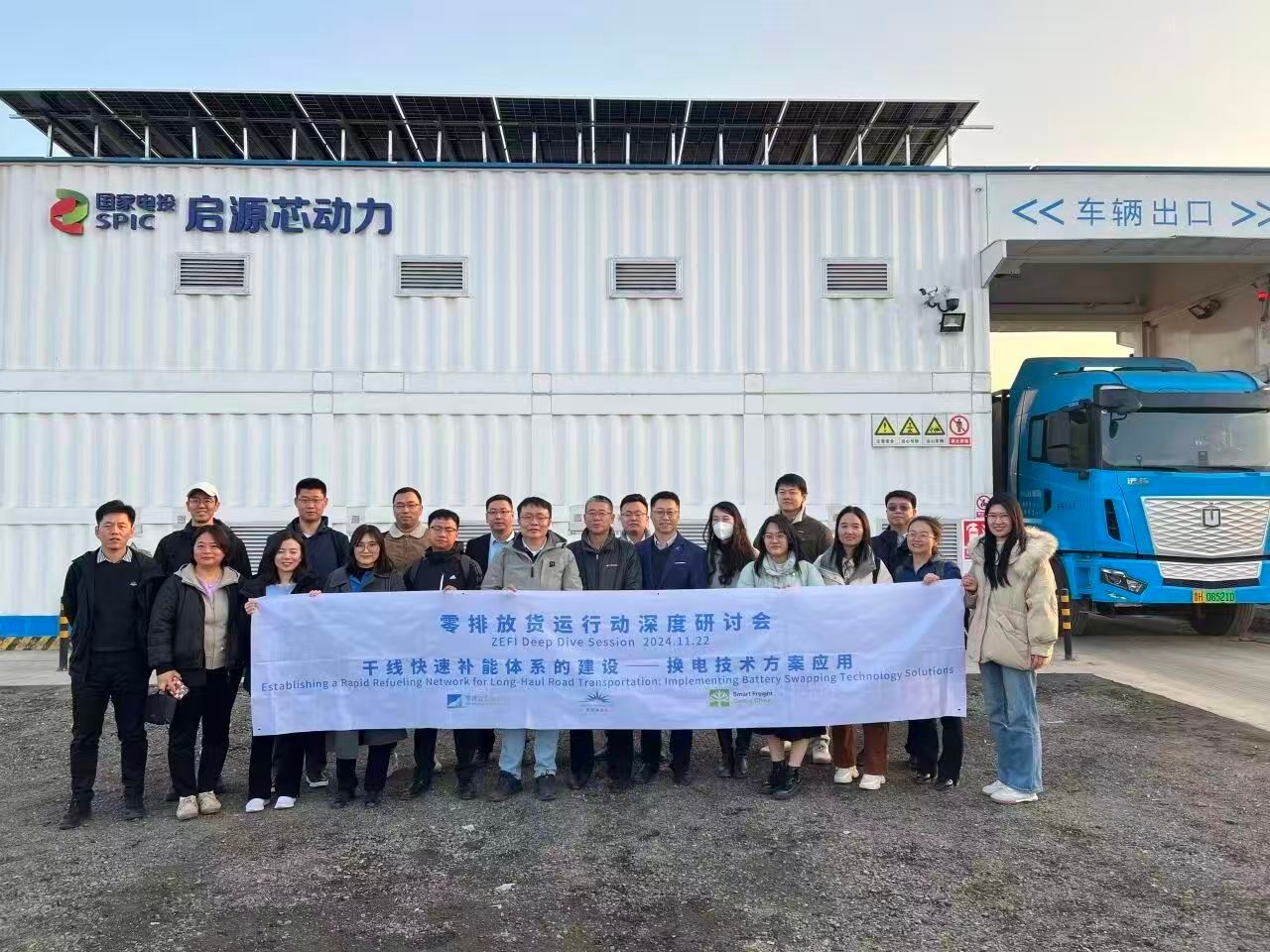
Battery swapping is the second option, and still under active investigation. It captured roughly 36% of battery-electric truck sales in early 2025, with swap-capable heavy trucks reaching 30% market share in H1 2025. Contemporary Amperex Technology Co., Limited (CATL) has deployed standardized stations along industrial corridors like Ningde-Fuzhou, enabling 3–5 minute refueling that matches diesel downtime.
Research by Fraunhofer IML confirms that swapping significantly reduces vehicle downtime compared to fast charging, but requires more batteries in the system and raises questions about asset utilization and standardization. The economics work well on dedicated, high-frequency routes. On more dispersed networks, specialized swap assets risk driving costs higher. Battery swapping likely remains viable where grid limitations or operational constraints prevent megawatt charging adoption—but its long-term role depends on whether external factors create sufficient demand to justify the infrastructure.
Research by Fraunhofer IML confirms that swapping significantly reduces vehicle downtime compared to fast charging, but requires more batteries in the system and raises questions about asset utilization and standardization. The economics work well on dedicated, high-frequency routes. On more dispersed networks, specialized swap assets risk driving costs higher. Battery swapping likely remains viable where grid limitations or operational constraints prevent megawatt charging adoption—but its long-term role depends on whether external factors create sufficient demand to justify the infrastructure.
Electric Road Systems—including overhead catenary lines, conductive rails, and inductive charging—are included here for completeness. The technology has been piloted in Germany, Sweden, and France, and France has announced plans for a 9,000-km ERS network by 2035. However, ERS faces substantial unresolved challenges: high upfront infrastructure costs (estimated at €1.7–3.1 million per kilometer for catenary systems), lack of cross-border standardization, durability issues with in-road inductive systems, and limited OEM vehicle compatibility. Meaningful progress on these barriers is unlikely in 2026.
The consensus on the ground is clear: no single charging technology currently meets all needs and constraints optimally. As technology progresses and our assumptions about the hardness of barriers are revised, it is important to continually revisit these approaches. At the same time, pursuing multiple systems simultaneously risks increasing analysis paralysis and inertia in the transition. The challenge is to remain open to new possibilities without losing the momentum that comes from committing to action.
The Corridor Approach: From Pilots to Green Lanes
In many ways, local and regional transport, characterized by back-to-back operations, has a high chance of achieving Total Cost of Ownership (TCO) parity, especially with state-of-the-art planning and management strategies. In 2026, rather than waiting for comprehensive national networks, the industry is pivoting to "corridor strategies"—electrifying high-density industrial routes first. This approach is proving commercially viable, driven by shipper Scope 3 emissions targets and TCO advantages.
In China, electric trucks already show a TCO advantage of 10–26% over diesel. In predictable routes with return-to-base operations, eTrucks are cost-competitive without subsidies. While China has crossed the market share tipping point on ZET sales, the P&G pilot on the SH-GZ corridor reveals that operational friction – specifically a 48% increase in travel time due to off-freeway detours (despite a 19% fuel cost saving) – remains the primary barrier to mass adoption. Achieving a self-sustaining transition requires more than just vehicle sales, it demands freeway-integrated, megawatt-class charging hubs and targeted price subsidies to incentivize first movers and mitigate the uncertainty faced by early-adopting carriers.
The next step in the evolution is the Shanghai–Guangdong Zero-Emission Freight Corridor, which is set to become the world's longest zero-emission road corridor. Led by Smart Freight Centre China, this project integrates heavy-duty tractors with fast-charging and megawatt-charging facilities across four provinces. Connecting the Yangtze River Delta and Pearl River Delta—which together account for one-third of China's GDP—the project prioritizes industry-led collaboration to address real-world operational challenges, working with government and public-sector stakeholders to avoid the limitations of traditional top-down models.
The next step in the evolution is the Shanghai–Guangdong Zero-Emission Freight Corridor, which is set to become the world's longest zero-emission road corridor. Led by Smart Freight Centre China, this project integrates heavy-duty tractors with fast-charging and megawatt-charging facilities across four provinces. Connecting the Yangtze River Delta and Pearl River Delta—which together account for one-third of China's GDP—the project prioritizes industry-led collaboration to address real-world operational challenges, working with government and public-sector stakeholders to avoid the limitations of traditional top-down models.
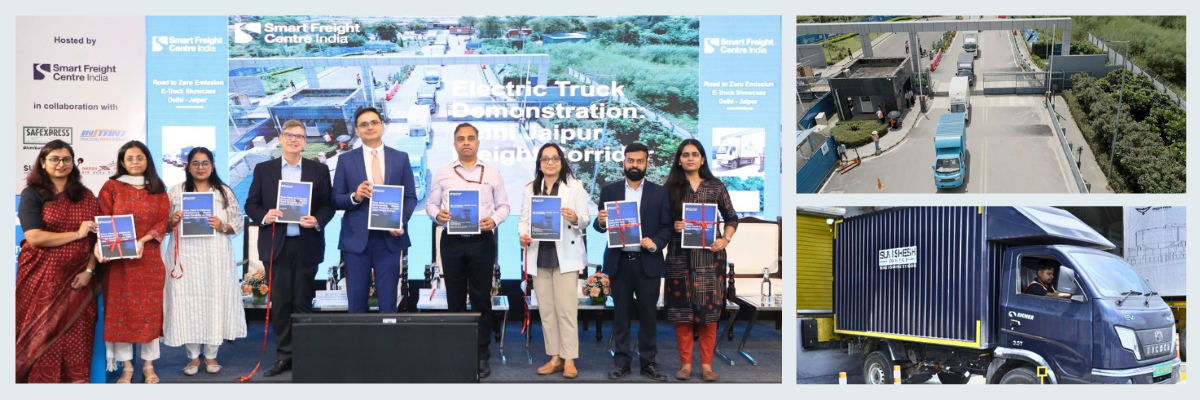
India is demonstrating that long-haul electrification works even in economies with high fossil fuel dependency—a dynamic common across much of the developing world. The Delhi-Jaipur corridor (280 km, NH-48) demonstrates the corridor approach in practice. Smart Freight Centre's Data Partnership Corridor Program tested multiple electric truck configurations (5.5-ton to 55-ton GVW) across the route. Results showed 20-26% energy cost savings and 38-175 kg CO₂ reduction per trip compared to diesel. TCO parity is achievable at 6,000 km/month with partial depot charging, further enhanced by renewable energy integration. The corridor's flat terrain, high freight density, and proximity to Rajasthan's solar and wind zones (Bhadla Solar Park, Jaisalmer wind-solar clusters) demonstrate how renewable-powered charging can support cost-competitive operations. This demonstrates operational feasibility supported by real-world data.
While the adoption of electric N3 trucks remains in its early stages, 2025 saw a massive jump in volume compared to previous years. Total of 573 trucks were deployed in 2025, compared to 224 in 2024, with cumulative sales exceeding 1,100 units. The surge in 2025 reflects growing confidence in electric trucks as reliable operational assets. Regional adoption is closely aligned with India’s major industrial clusters and freight corridors. The top 10 states represent the bulk of the market, led by Maharashtra, which accounts for 30% of national adoption.
In 2026, Indian manufacturers are moving from proof of concept to deployment at increasing scale. While the numbers remain small compared to China, this represents a pivotal moment for corridor electrification. BillionE and Hindalco deployed 15 Ashok Leyland 55-ton electric trucks on a 160-km industrial route in Gujarat (Dahej-Asoj). Ashok Leyland secured orders for 180 electric trucks across models (Avtr 55T, BOSS 19T, BOSS 14T) for routes including Chennai-Bengaluru and Chennai-Vijayawada. These are no longer isolated pilots—they are the foundation of operational corridors.
In 2026, Indian manufacturers are moving from proof of concept to deployment at increasing scale. While the numbers remain small compared to China, this represents a pivotal moment for corridor electrification. BillionE and Hindalco deployed 15 Ashok Leyland 55-ton electric trucks on a 160-km industrial route in Gujarat (Dahej-Asoj). Ashok Leyland secured orders for 180 electric trucks across models (Avtr 55T, BOSS 19T, BOSS 14T) for routes including Chennai-Bengaluru and Chennai-Vijayawada. These are no longer isolated pilots—they are the foundation of operational corridors.
Write your awesome label here.
Write your awesome label here.
Conclusion: The 2026 Turning Point
The defining characteristic of 2026 will be the emergence of visibly electrified corridors. This requires:
The defining characteristic of 2026 will be the emergence of visibly electrified corridors. This requires:
-
Sufficient availability of charging networks providing carrier-oriented charging services along corridors.
-
Market signals from carriers and LSPs promoting electrified corridor services, at a reasonable price point, and with a verified low-carbon emissions profile.
Underpinning this is the work of shippers to continually engage and collaborate with their service providers to start the electrification transition, and provide strong signals on where shipping lanes need to be electrified. The role of regulations in implementing policies that encourage corridor electrification and discourage fossil fuel-based transport is equally critical—alignment along corridors, even across jurisdictions, is essential for coherent corridor electrification policy.
While a general market tipping point may not yet be reached globally, the combination of high-quality charging networks and clear market signals from shippers is creating a permanent transition. China has proven that electric trucks can scale to industrial volumes; India has proven they are viable in developing markets. Driven by shipper demand, falling costs, and cleaner grids, eTrucking is becoming the competitive standard. The question is no longer if electric freight will happen, but how quickly the infrastructure and investment ecosystems can race to match the technology's proven capability.
The main challenge is moving beyond the familiar chicken‑and‑egg dilemma, where OEMs, infrastructure providers, and investors wait for clear demand signals, while shippers and logistics service providers hesitate to commit without assurance that their operations will remain cost‑ and emissions‑efficient. Around the world, governments and NGOs will need to take the lead in bringing stakeholders together, fostering collaboration, and guiding collective action forward.
The main challenge is moving beyond the familiar chicken‑and‑egg dilemma, where OEMs, infrastructure providers, and investors wait for clear demand signals, while shippers and logistics service providers hesitate to commit without assurance that their operations will remain cost‑ and emissions‑efficient. Around the world, governments and NGOs will need to take the lead in bringing stakeholders together, fostering collaboration, and guiding collective action forward.
Ready to deepen your understanding of road freight emissions and learn how to apply these critical calculation frameworks? Enroll in our courses below:
Courses related to this subject:
Who we are
The Smart Freight Centre Academy is the education and knowledge-hub of globally recognised NGO Smart Freight Centre, a leader in freight decarbonization practices, standards and frameworks.
Copyright © 2026
10% Discount
Start Your Freight Decarbonization Learning Journey.
Receive 10% off your first course.
Coupon Code:
SFCAcademy10
SFCAcademy10
Are you an SFC member? Go to our resource centre to explore your member benefits.