
SBTi, CDP & GLEC: How the Standards Interconnect for Logistics Emission Accounting
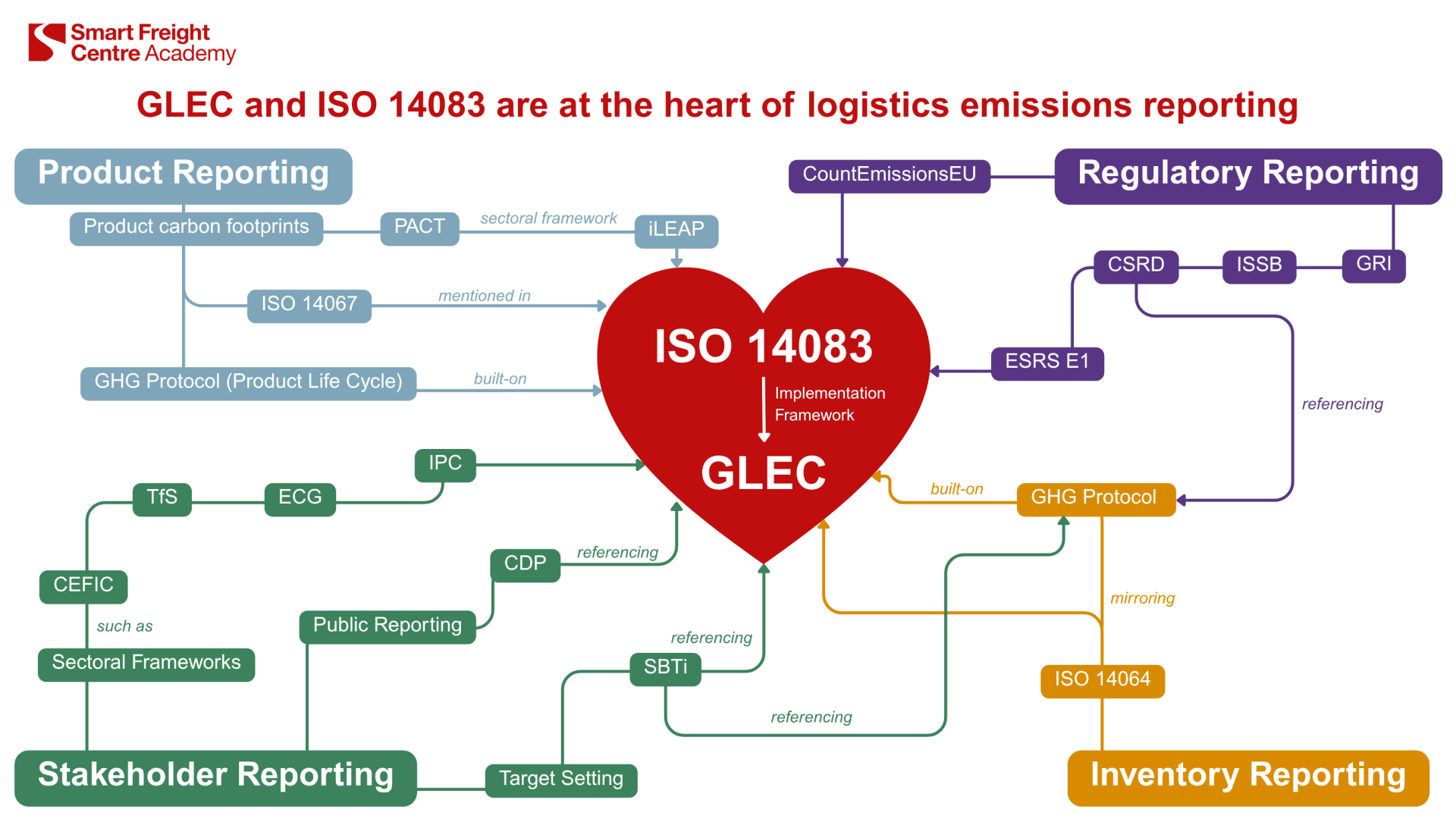
As logistics emission accounting becomes increasingly shaped by voluntary standards, stakeholder expectations, and mandatory regulations, organizations face growing complexity in aligning their logistics emission reporting.
From SBTi target setting and CDP (Carbon Disclosure Project) disclosure, to ISO 14083, CSRD (Corporate Sustainability Reporting Directive), and the emerging CountEmissions EU regulation, freight and logistics professionals are often left asking a fundamental question: which framework do we actually use for freight emissions accounting?
The answer is increasingly clear: GLEC (Global Logistics Emissions Council) is the one-stop implementation framework for freight emission accounting. While many standards define reporting expectations, disclosure obligations, or climate ambition, the GLEC Framework provides the practical methodology and supporting data organizations use to consistently calculate, allocate, and report freight transport emissions.
From SBTi target setting and CDP (Carbon Disclosure Project) disclosure, to ISO 14083, CSRD (Corporate Sustainability Reporting Directive), and the emerging CountEmissions EU regulation, freight and logistics professionals are often left asking a fundamental question: which framework do we actually use for freight emissions accounting?
The answer is increasingly clear: GLEC (Global Logistics Emissions Council) is the one-stop implementation framework for freight emission accounting. While many standards define reporting expectations, disclosure obligations, or climate ambition, the GLEC Framework provides the practical methodology and supporting data organizations use to consistently calculate, allocate, and report freight transport emissions.
Understanding the ecosystem: strategy, disclosure, and implementation
Many sustainability frameworks serve different purposes across the freight decarbonization landscape. GHG Protocol sets the foundational accounting principles for Scope 1, 2, and 3 emissions. The GLEC Framework sets the methodology for freight and logistics emissions accounting and contains the “Built on GHG Protocol” mark for its compliance with GHG Protocol’s requirements.
Strategic and target-setting frameworks help organizations define climate ambition:
-
SBTi (Science Based Targets initiative): Sets emissions reduction pathways aligned with climate science
-
FRS S2: Guides climate-related financial disclosures
Disclosure and stakeholder reporting frameworks support transparency and external reporting:
-
CDP: Environmental disclosure platform
-
CSRD / ESRS E1: EU corporate sustainability disclosure requirements
-
National disclosure frameworks: California, Australia, New Zealand, UK, and others increasingly align with ISSB (The International Sustainability Standards Board) / TCFD (Task Force on Climate-related Financial Disclosures) principles
Product and logistics-specific implementation frameworks operationalize emissions calculations:
-
ISO 14083: International standard for quantifying and reporting transport chain GHG emissions
-
ISO 14064: Broader organizational and project-level GHG accounting standard
While many frameworks define what organizations should report, GLEC remains the practical framework that explains how freight emissions should actually be measured.
GLEC and ISO 14083: the implementation relationship
The GLEC Framework was the foundational basis in developing the ISO 14083 standard, which was finalized in 2023. Now, the relationship between GLEC and ISO 14083 is simple:
-
ISO 14083 defines what compliant freight emissions reporting should achieve
-
GLEC provides the practical methodology to achieve practical reporting
Smart Freight Centre positions GLEC as the primary implementation resource for ISO 14083, GLEC goes further in providing the implementation material such as:
-
Methodologies aligned with ISO requirements
-
Default values; fuel emission factors and emission intensity values
-
Detailed calculation guidance
-
Mode-specific methodologies
Simply put: if your organization wants to comply with ISO 14083, GLEC can be the operational route.
Why GLEC is central
The GLEC Framework services all freight emission reporting needs.
1. Inventory reporting
Organizations use GLEC to build their logistics emissions inventory consistently within both Scope 1 and Scope 3 inventories.
2. Stakeholder reporting
GLEC aligned inventories and reports support:
-
CDP disclosures
-
SBTi transport target methodologies
-
Customer and shipper reporting requirements
4. Product reporting
GLEC supports:
-
Product carbon footprints
-
PACT (Partnership for Carbon Transparency) data exchange through the iLEAP Protocol
-
Customer-specific logistics footprinting
In practice, GLEC translates broad sustainability standards into usable freight emissions calculations.
Where SBTi fits
The Science Based Targets initiative is not an emissions accounting methodology.
Instead, SBTi:
-
Defines decarbonization ambition
-
Sets target pathways
-
Requires credible emissions measurement
For freight-specific target setting, organizations still need robust logistics emissions data.
This is where GLEC becomes essential:
-
SBTi Transport Guidance embeds GLEC principles
-
GLEC provides freight baseline calculations
-
GLEC enables progress tracking against targets
Bottom line: SBTi tells you where to go. GLEC helps you measure how to get there.
Where CDP fits
CDP is a disclosure platform, not a calculation methodology. Companies reporting through CDP require:
-
Accurate Scope 3 logistics data
-
Consistent transport emissions calculations
-
Comparable reporting across stakeholders
GLEC supports this by:
-
Standardizing freight calculations
-
Improving data quality
-
Supporting disclosure consistency
-
Enabling supplier and shipper comparability
Bottom line: CDP is where you disclose. GLEC is how you calculate.
The rising importance of CountEmissions EU
The upcoming CountEmissions EU regulation significantly raises the importance of standardized freight emissions methodologies.
Why this matters:
This regulation aims to create harmonized emissions accounting requirements across European transport systems.
Why this matters:
-
Greater transparency for freight buyers
-
Standardized calculation obligations
-
Increased pressure for verified methodologies
-
Stronger integration with ISO 14083
For organizations that will report according to CountEmissions EU, ISO 14083 alignment is the requirement and GLEC is the way forward to operationalize this requirement.
Key takeaway
For freight emissions accounting, organizations do not need separate methodologies for every framework.
Instead, GLEC serves as the operational backbone that connects the different voluntary and mandatory logistics emission reports. GLEC transforms fragmented sustainability expectations into a single, practical methodology for:
-
Measuring
-
Reporting
-
Verifying
-
Disclosing
-
Complying
Final thought
As regulatory and stakeholder demands continue to evolve, the companies best positioned for future compliance will be those that simplify complexity rather than treating every framework separately. SFC strives to reduce complexity and ensure continued harmonization across these standards.
For freight, that means understanding one core truth:
GLEC is not just another framework — it is the connective tissue of credible freight emission accounting.
Want to learn more about emissions accounting and how to integrate primary data into your reporting? Explore our courses below.
Courses related to this subject:
Who we are
The Smart Freight Centre Academy is the education and knowledge-hub of globally recognised NGO Smart Freight Centre, a leader in freight decarbonization practices, standards and frameworks.
Copyright © 2026
10% Discount
Start Your Freight Decarbonization Learning Journey.
Receive 10% off your first course.
Coupon Code:
SFCAcademy10
SFCAcademy10
Are you an SFC member? Go to our resource centre to explore your member benefits.