
Why Sustainable Aviation Fuel (SAF) Needs More Than Airlines to Pay for It
Download the full infographic below.
A concept known as "co-claiming", currently being piloted by the Massachusetts Institute of Technology (MIT), Smart Freight Centre (SFC), and the Roundtable on Sustainable Biomaterials (RSB), starts from a different question: what if the cost of SAF procurement was split among value chain partners.This infographic and article will give industry professionals an accurate, fully source-traceable explanation of why and how SAF co-claiming works, so they understand the concept ahead of broader pilot updates. Sustainable aviation fuel (SAF) is widely recognized as the solution best positioned to reduce air travel or air travel and logistics emissions, expected to deliver up to 65 percent of aviation's emissions reductions by 2050. Production is growing fast: global SAF production has roughly doubled every year since 2022, though volumes remain small. SAF accounted for 0.3 percent of global jet fuel demand in 2024, rising to 0.5 percent in 2025 and an estimated 0.8 percent in 2026. Abatement costs for SAF exceed $1,000 per tonne of CO2 and are unlikely to fall substantially below $200 per tonne even when production scales even more. Costs remain high, and are a clear barrier to organizations with the ambition to reduce their emissions from aviation.
Scaling SAF adoption beyond compliance obligations (mandates such as ReFuelEU) requires willingness and ability to pay a premium over fossil jet fuel. Airlines cannot absorb these costs alone, and their corporate passengers and air cargo customers can only support the needs partially.
A concept known as "co-claiming", currently being piloted by the Massachusetts Institute of Technology (MIT), Smart Freight Centre (SFC), and the Roundtable on Sustainable Biomaterials (RSB), starts from a different question: what if the cost of SAF procurement was split among value chain partners. This concept has recognition in SBTi's new Corporate Net Zero Standard and in GHGP's draft AIM document.
The value chain carries more responsibility than the ticket implies
A single flight involves far more parties than the airline. Fuel suppliers, aircraft manufacturers, aircraft leasing companies, banks that finance aircraft, and airports that handle the flights all have some degree of involvement with the emissions associated with a flight. The GHGP’s Scope 3 guidance states that each entity in the value chain has some degree of influence over emissions and reductions, and that Scope 3 accounting facilitates the simultaneous action of multiple entities to reduce emissions.
Imagine a single Boston to Amsterdam flight, producing roughly 110 tonnes of CO2. The airline has direct responsibility for that flight. Assuming indirect upstream responsibility, multiple parties are involved including the fuel provider, aircraft manufacturers, banks and lessors financing the aircraft, and the airport. Assuming indirect downstream responsibility, multiple parties are also involved, including the business traveler in the cabin and the shipper and logistics service provider in the hold. But today, the airline is the only one held directly accountable.
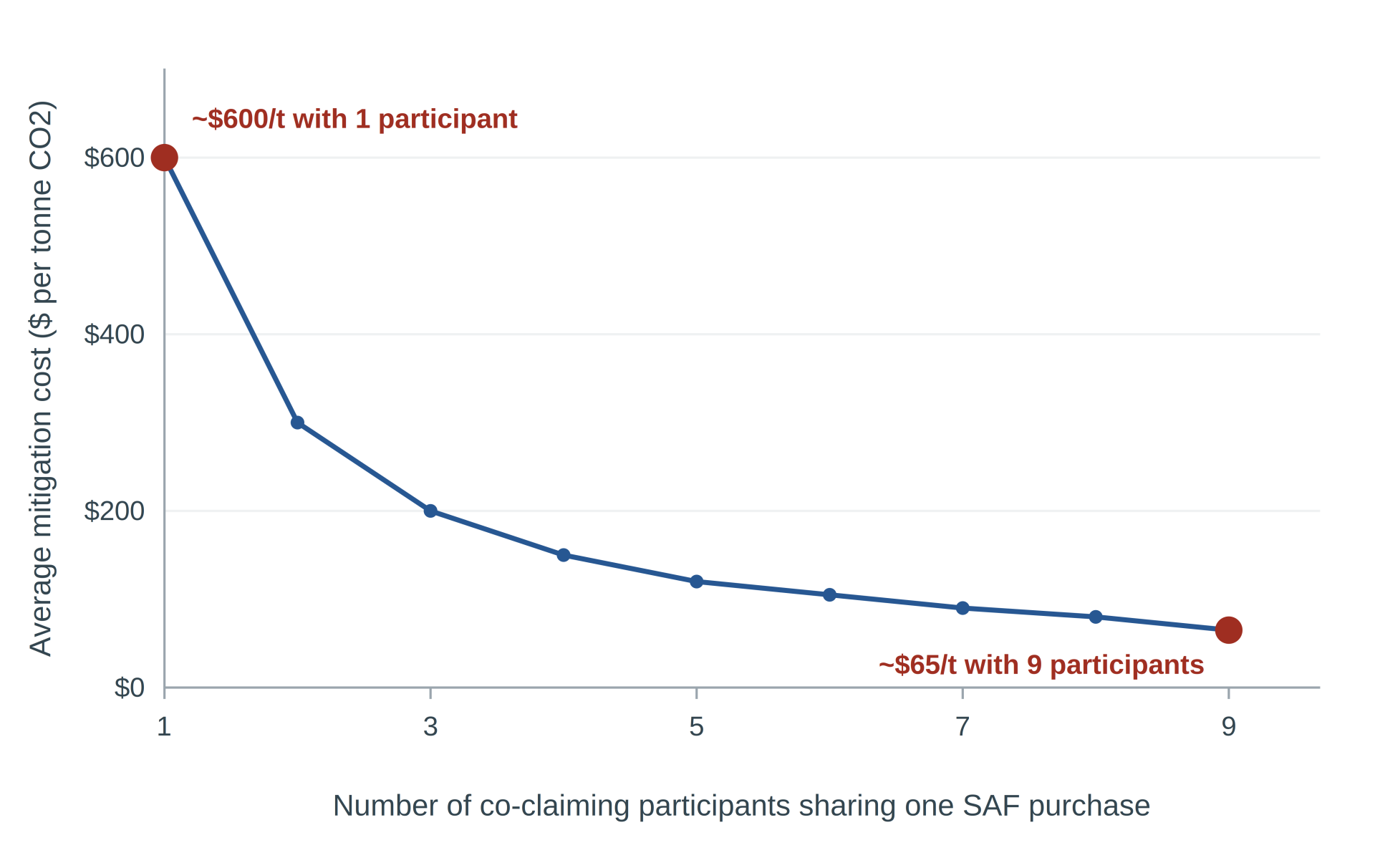
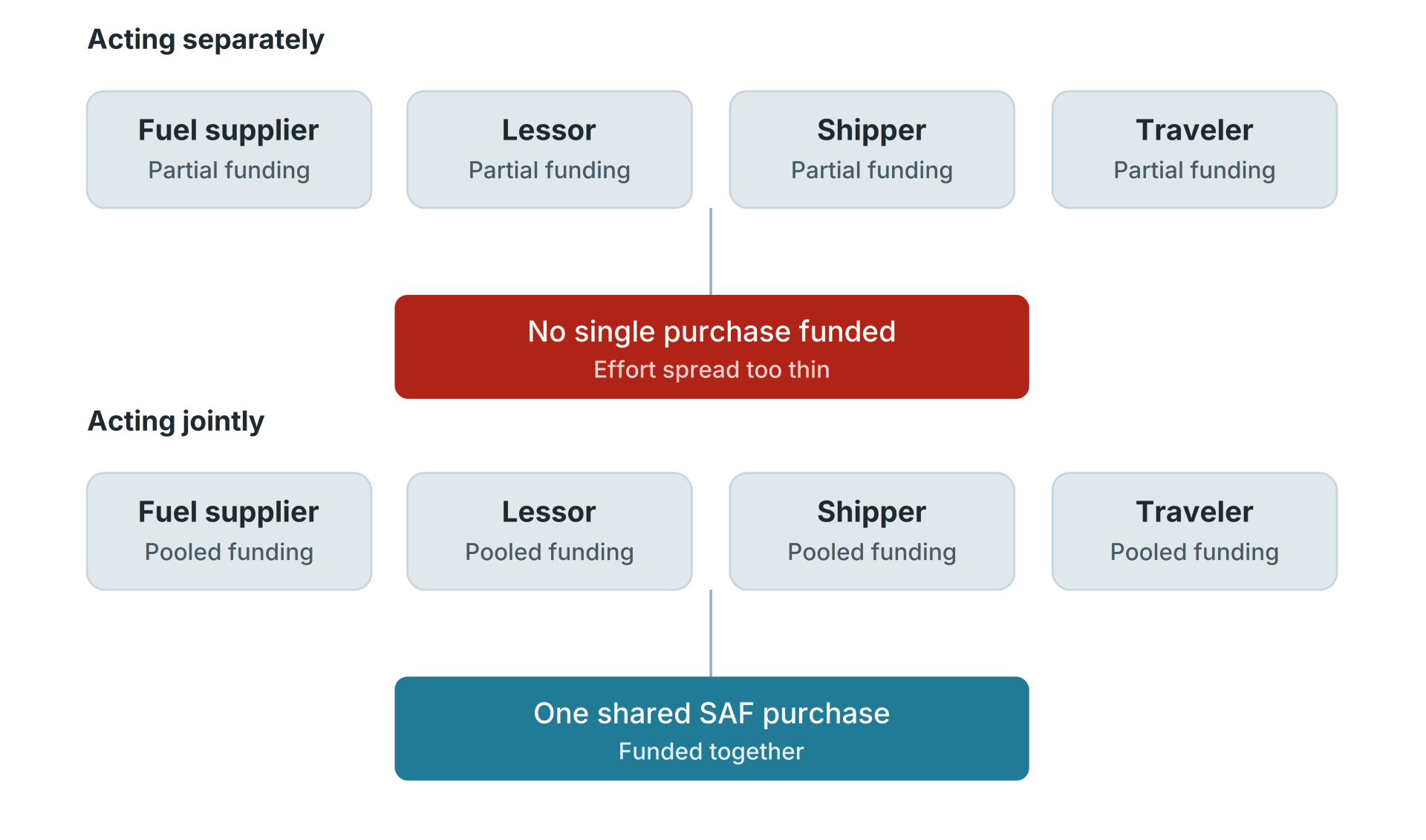
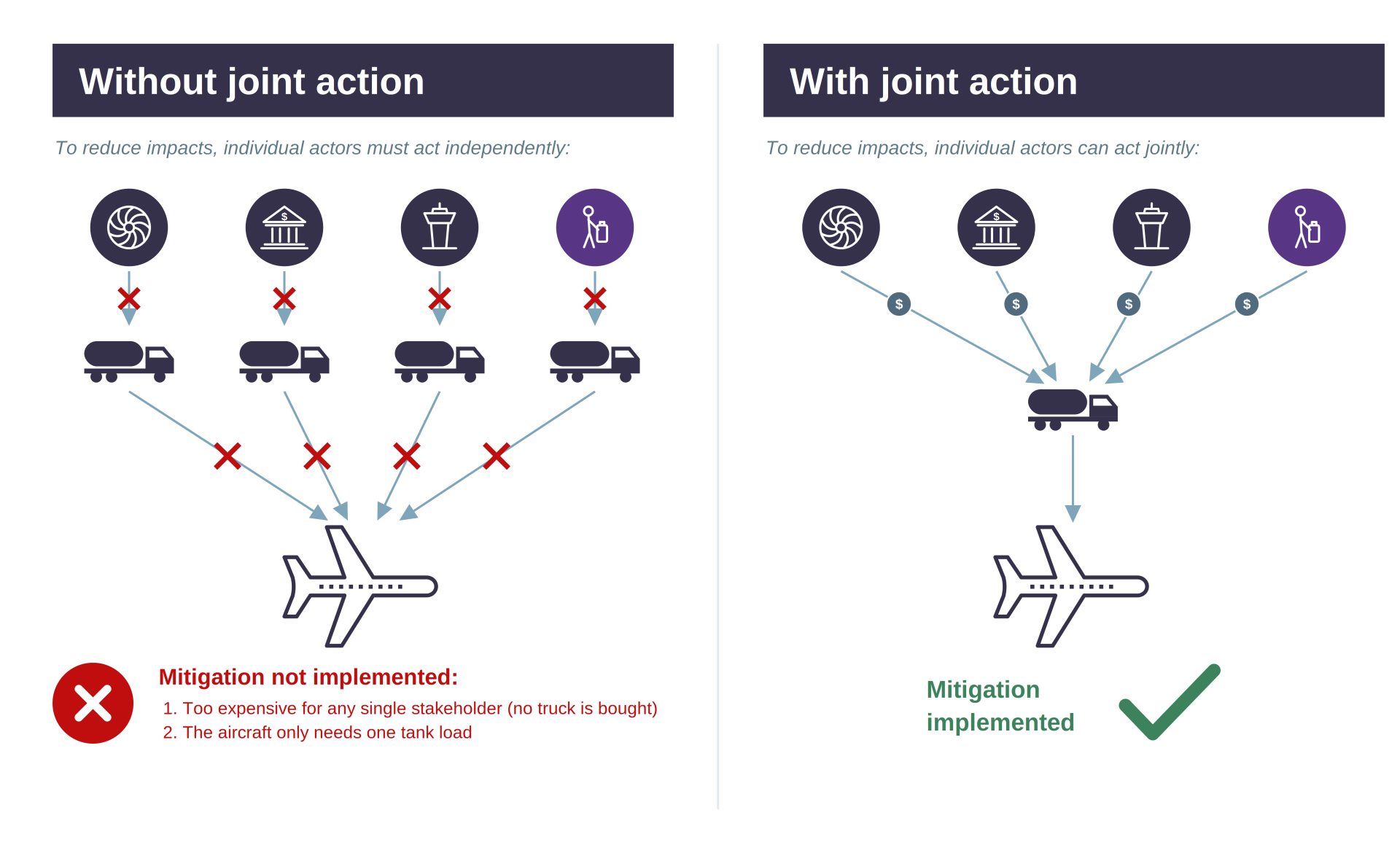
What happens when the cost is shared
How the framework works: lenses instead of shared ownership
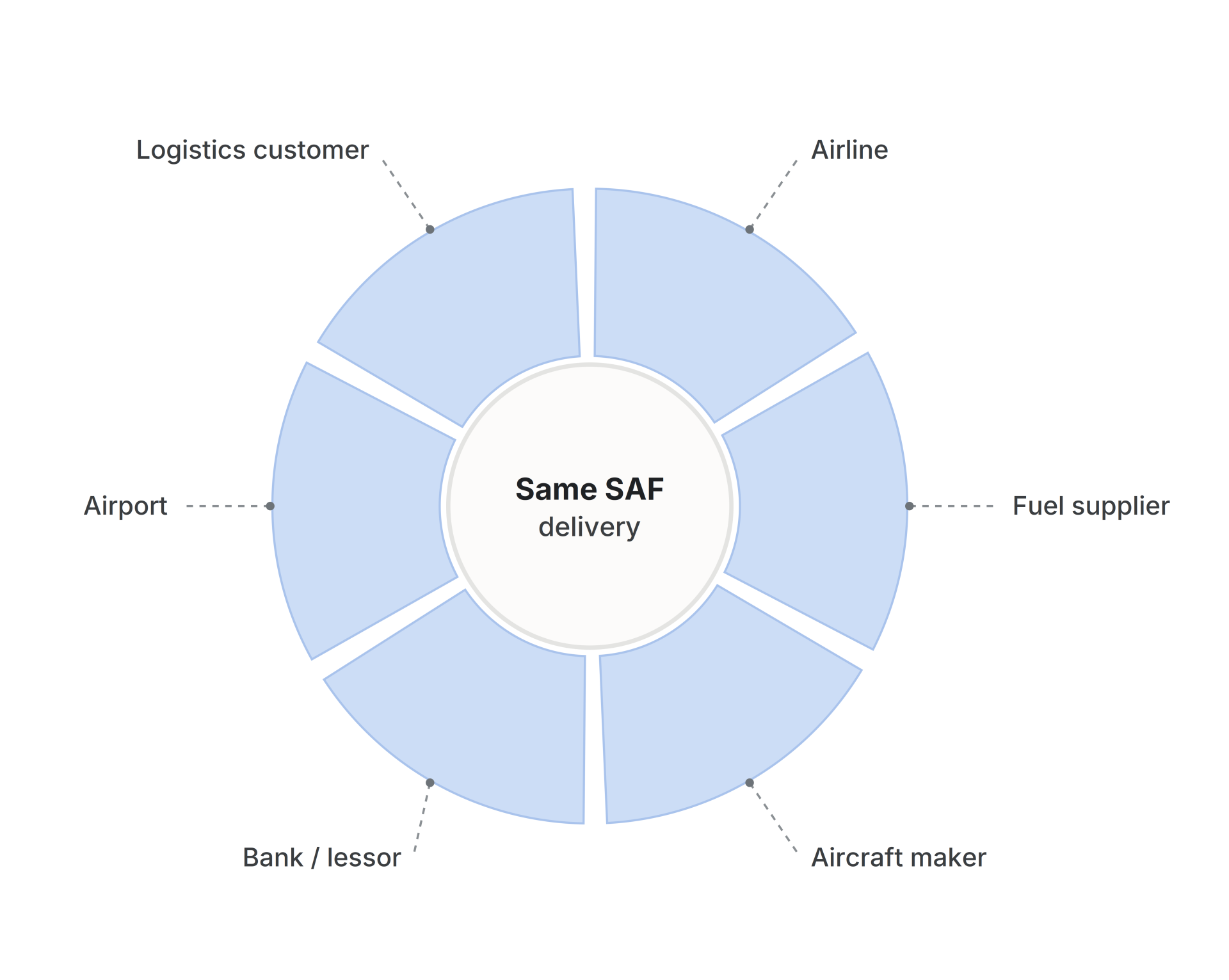
There are already real examples of it in use. The RSB Book and Claim Registry tracks SAF registered as Book and Claim Units. It has also issued retirement statements that record the specific volumes, the CO2e reductions, and whether the receiving party is claiming them under Scope 1 or Scope 3.
What still needs to be resolved
Integrity has to come first. Several groups independently arrived at language close to "scaling through integrity," with transparency on feedstock, traceability, and verified physical delivery named as non-negotiable, alongside consistent third-party assurance.
The system also does not yet extend cleanly to every relevant stakeholder. Lessors, banks, and insurers, all of whom carry some financial exposure to aviation emissions, currently lack a clear framework for making a credible claim. Aircraft manufacturers face a related problem: use-phase impacts must be anticipated and structured before an aircraft is even sold.
Finally, alignment with existing standards remains an open task. Compatibility with the Greenhouse Gas Protocol, the Global Maritime Forum's frameworks, and registry infrastructure that can track unique claims at scale are all named as work still needed.
What happens next
Download the infographic (PDF) for or a one-page visual overview of SAF co-claiming: who’s involved in a flight’s value chain, how the “lens” concept prevents double counting, and where the Co-Claims pilot stands.
Explore SFC Academy courses below.
Courses related to this subject:
Who we are
10% Discount
SFCAcademy10